
 Lifecycle marketing
 Customer data management
 Email campaign production
 Search marketing
 CMS development
 Who we are
 How we work
 Case studies
 Testimonials
 Salesforce Marketing Cloud
 Braze
Braze HubSpot
 Marketo
 Pardot
 DataBricks
 Snowflake
 HighTouch
 RudderStack
 Segment by Twilio
 Videos

Salesforce Marketing Cloud (SFMC) offers two primary methods for creating email templates: the Inbuilt Drag-and-Drop Email Builder and Custom-Coded Email Templates. Now, each approach has its distinct merits, demerits, and use cases.
So far, so fair. However, the real question is: Which method is your method? Should you go the prefab route? Or hire a developer to get it done to spec?
In today’s blog post, our SFMC experts shed light on one of the prevalent debates in email marketing.
We are a Salesforce partner. We have served over 800 Salesforce Marketing Cloud (SFMC) clients over the last 12 years. Trust us, we’re settling this for all time. Let’s get started!
Inbuilt Drag-and-Drop Email Builder
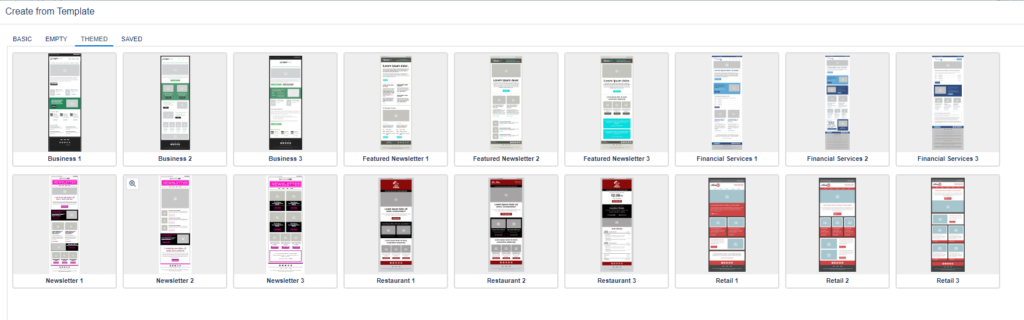
The Inbuilt Drag-and-Drop Email Builder in Salesforce Marketing Cloud (SFMC) is designed to be user-friendly and accessible, making it ideal for marketers without coding skills. Here are some of its key features:
- User-friendly interface: The builder features a graphical interface where you can easily drag and drop content blocks (text, images, buttons, etc.) to design your email.
- Predefined templates and blocks: It offers a variety of predefined templates and content blocks, making it easy to create professional-looking emails quickly.
- Responsive design: Emails designed with the Drag and Drop Builder are automatically responsive, ensuring they look great on all devices. SFMC ensures that the templates created this way render well across different clients.
- Real-time preview: You can see how your email will look as you build it, making it easy to make adjustments on the fly.
- No coding required: This tool is perfect for users with little to no coding experience.
- Cost-effective: For businesses without in-house development teams, the drag-and-drop builder is cost-effective as it doesn’t require any coding skills or external resources.
Advantages
The Drag-and-Drop email builder has the following advantages:
- Ease of use: The simplicity of dragging and dropping elements makes email creation quick and accessible to all team members.
- Easy to edit & reuse: You can easily edit the email directly from the side panel of the relevant block without needing to access the complex source code, allowing you to reuse the layout.
- Saves time: Allows for rapid email creation without investing much time, making it an ideal option for fast-paced marketing environments.
- Repository for the inspiration: Having the reference of the different types of default blocks and skeleton-ready layouts helps you choose the right module or an entire template as per the content/purpose of your email campaign.

Limitations
Salesforce Marketing Cloud’s (SFMC’s) email builder has the following limitations:
- Customization: Limited to the features and blocks provided by the builder, which may restrict more advanced or unique designs.
- Flexibility: Less flexible compared to custom-coded templates, especially for highly specialized design-heavy email layouts.
- Responsiveness: Mobile versions, through this method, are sometimes less controllable when you want a specific type of section/block to be responsive in a certain way in the smaller screen sizes.
- Compatibility: Layouts created from the Drag & Drop method are sometimes noticed as less compatible with some older versions of the Email Clients, Systems, and Devices in terms of pixel-perfect rendering.
Custom-coded Email Templates
Custom-coded email templates provide the flexibility to create highly tailored and unique email designs. This approach is suited for teams with HTML and CSS coding expertise and a need for customized email functionality. In Salesforce Marketing Cloud (SFMC), its key features are:
- Full design control: Allows for complete control over the email’s design, enabling unique and brand-specific layouts.
- Advanced functionality: Facilitates the inclusion of custom scripts and interactive elements that are not possible with the Drag and Drop Builder.
- Reusable code snippets: You can create reusable code snippets to streamline the creation of future emails.
- Custom data integration: Integrates with dynamic data for personalized email content.
Advantages
In SFMC, custom coding has the following advantages:
- Customization & stylization: You can create unique email layouts with endless design options by using various elements like gradients, border radius, strokes, and shadows through advanced CSS properties.
- Flexibility: Templates built with custom HTML offer great flexibility, allowing you to edit most parts of the email.
This flexibility depends on how the template is coded, with each element designed as an independent module for future reuse. If the template uses “Advanced Integration Tags,” you can easily manage common edits, like replacing images, changing background colors, or rearranging sections, through a Custom Code Editor, without dealing with complex HTML source code.
- Accurate email rendering: The emails are rendered accurately in popular email clients, and with some research and testing, you can achieve good results in less typical clients as well.
- Advanced interactivities: This approach enables compatibility with interactive features like Accordions, Sliders, Countdown timers, and various hover effects. For email clients that don’t support these features, fallback versions of the interactive elements will be included.
Limitations
Notwithstanding the advantages, custom-coding has a couple of limitations, too:
- Technical skills needed: You need to know HTML and CSS to create or edit emails. This allows you to make necessary changes and reuse them for future campaigns. If someone without technical skills adds incorrect code while editing, it can cause major layout issues when the email is displayed.
- Time-intensive: The time it takes can vary based on the template’s length. Custom HTML coding and testing can sometimes be more time-consuming than using a drag-and-drop builder.
Summing up: Which one is your method?
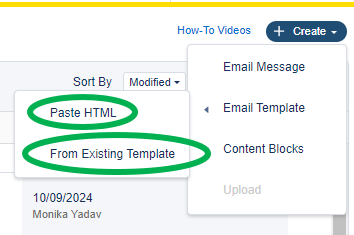
So, which road should you take? Here’s a way to decide:
- Drag-and-drop email builder: Great for teams looking to quickly create professional emails without coding. Perfect for standard marketing campaigns that don’t need much customization. Ideal for deploying campaigns swiftly without extensive personalization.
- Custom-coded email templates: Ideal for brands that need personalized, brand-aligned emails with advanced features. Best for teams skilled in coding who want unique email designs. Suitable for brands with strict design guidelines requiring custom functions or complex content.
The choice between the Drag and Drop Email Builder and custom-coded email templates in Salesforce Marketing Cloud (SFMC) depends on your team’s skills, the complexity of your email designs, and your specific marketing needs.
Both methods have their own strengths, and understanding these can help you leverage the best tool for your email marketing strategy.
If you’re struggling to choose, we can help. Depending on your campaign needs, you might require a mix of both at times. You tell us. Our six-step process of email marketing (see below) has helped over 5,000 clients across 52+ countries.

For more information on SFMC, head over to our Salesforce-related blog posts.