
 Lifecycle marketing
 Customer data management
 Email campaign production
 Search marketing
 CMS development
 Who we are
 How we work
 Case studies
 Testimonials
 Salesforce Marketing Cloud
 Braze
Braze HubSpot
 Marketo
 Pardot
 DataBricks
 Snowflake
 HighTouch
 RudderStack
 Segment by Twilio
 Videos

In one study, participants saw a standard IKEA sofa ad, while another group viewed the same ad enhanced with a message inviting them to join IKEA’s zero-waste mission. When asked how much they’d pay for the sofa, the group exposed to the circularity-focused version consistently valued it higher. The study was conducted by the BU Institute for Global Sustainability.
The circular economy isn’t a fringe movement anymore. When customers engage with take-back programs, recycling initiatives, and refill rewards, they stop viewing your brand as just another transaction and start seeing it as a partner in their values. That mindset shift directly translates to repeat purchases, higher spend, and genuine loyalty.
In fact, according to a joint study conducted by McKinsey and NielsenIQ in 2023:
- Both big and small brands grew faster when they made ESG claims. In 59% of categories, the smallest brands gained outsized growth. And in 50%, the largest did too.
- Products with multiple ESG claims grew faster. In nearly 80% of categories, growth rose in line with the number of distinct ESG claims made.
Now, whether these claims were consistently verified is uncertain. What is clear, however, is that consumers find them highly compelling.
Sustainability is now a core retail growth lever. If you’re not leveraging it already, now’s the time.
Drawing on our lifecycle marketing expertise, this blog post tells you how to do that through a well-designed sustainable loyalty program.
Modern sustainable loyalty programs: Key takeaways
Loyalty programs are evolving in response to changing customer expectations, technological capabilities, and a growing emphasis on long-term value creation:
- Gen Z and Millennials vote with their wallets, choosing brands aligned with health, planet, ethics, transparency, and community—and often paying more for genuine impact.
- Sustainability is moving beyond “doing less harm” toward restoring ecosystems, supported by circular economy language like reduce, reuse, and recycle.
- Modern loyalty programs are shifting from “earn and burn” mechanics to experience-led engagement—using fun, habit-building, and emotional connection.
- Customers stay loyal not just for savings, but for comfort, convenience, recognition, and the feeling of belonging.
- Radical transparency around sourcing, supply chains, carbon footprint, and certifications is critical to building trust and avoiding greenwashing.
- Loyalty, membership, subscription, and premium programs now overlap, giving brands the flexibility to design value exchanges that fit different customer segments.
- Sustainable marketing works when embedded into ongoing strategy, not one-off Earth Day or promotional initiatives.
- Today’s platforms can support complex, experience-rich loyalty ideas; the real opportunity lies in thinking beyond points and designing programs customers genuinely enjoy.
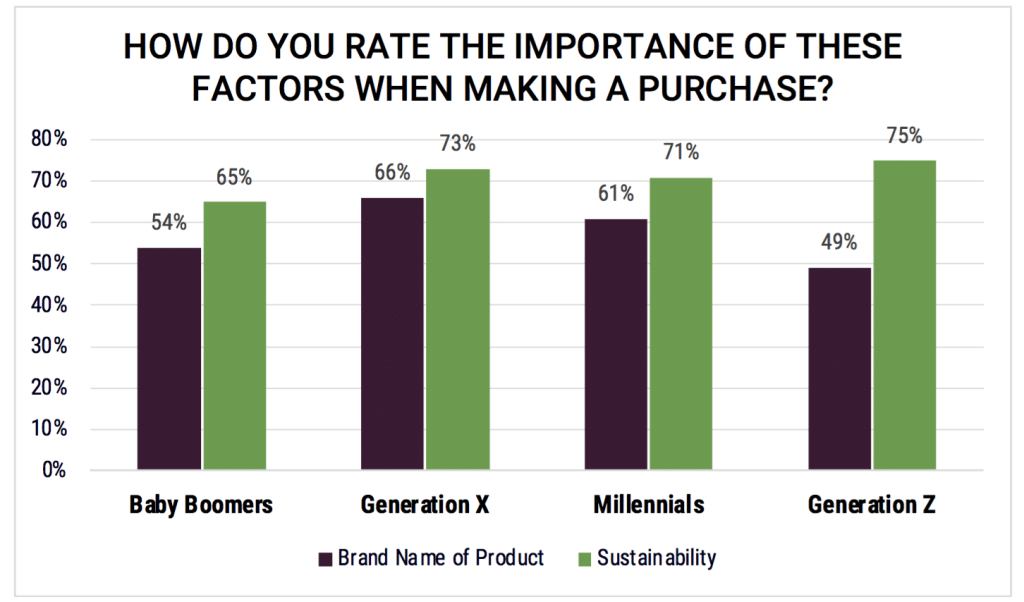
Source: First Insight
So then, with these insights in mind, brands now have a clear opportunity to connect loyalty and sustainability. The next step is aligning eco-friendly initiatives with your core values so that every program not only rewards behavior but reinforces the purpose your customers care about.
How to set up green loyalty programs
1. Align sustainability with brand values
Sustainability should reflect the brand’s core mission. By integrating eco-friendly initiatives into loyalty programs, brands reinforce their values and communicate a clear purpose. Customers see that their participation contributes to real-world impact, such as reducing carbon footprints or supporting charitable causes, which strengthens brand loyalty and makes green loyalty programs feel authentic rather than performative.
Here are a few ways to align sustainability with brand values:
- Build sustainability into the brand’s purpose and day-to-day actions so environmental and social responsibility clearly reflects what the brand stands for and how it operates.
- Make sustainability programs work like normal products in the business rather than siloed CSR initiatives, so they can scale without special treatment or massive investment.
- Lead with transparency by sharing goals, progress, and trade-offs honestly, which builds trust and helps avoid perceptions of greenwashing.
- Use clear, human-centered storytelling to show how sustainability efforts impact people and communities, making brand values feel real and credible.
- Communicate sustainability consistently across core channels and customer touchpoints, reinforcing brand values over time rather than treating it as a one-off initiative.
2. Hand out rewards for sustainable behavior
To drive real change, sustainability must be designed into loyalty mechanics. The most effective programs use behavioral incentives, transparency, and emotional motivation to nudge members toward better choices while preserving the core appeal of loyalty.
These approaches work best when framed as rewards for sustainable behavior:
- Leverage challenges, tiers, milestones, and recognition to motivate members, tapping into the natural human desire for achievement, exclusivity, and progress.
- Show members the tangible outcomes of their choices to shift sustainability from abstract intent to meaningful participation.
- Design the experience to feel joyful, energizing and satisfying (bright branding, fun unboxing, community content) so customers feel lighter and happier, not burdened by guilt or complexity.
- Let members opt into greener options so sustainability feels like a value-driven decision, not a downgrade in experience.
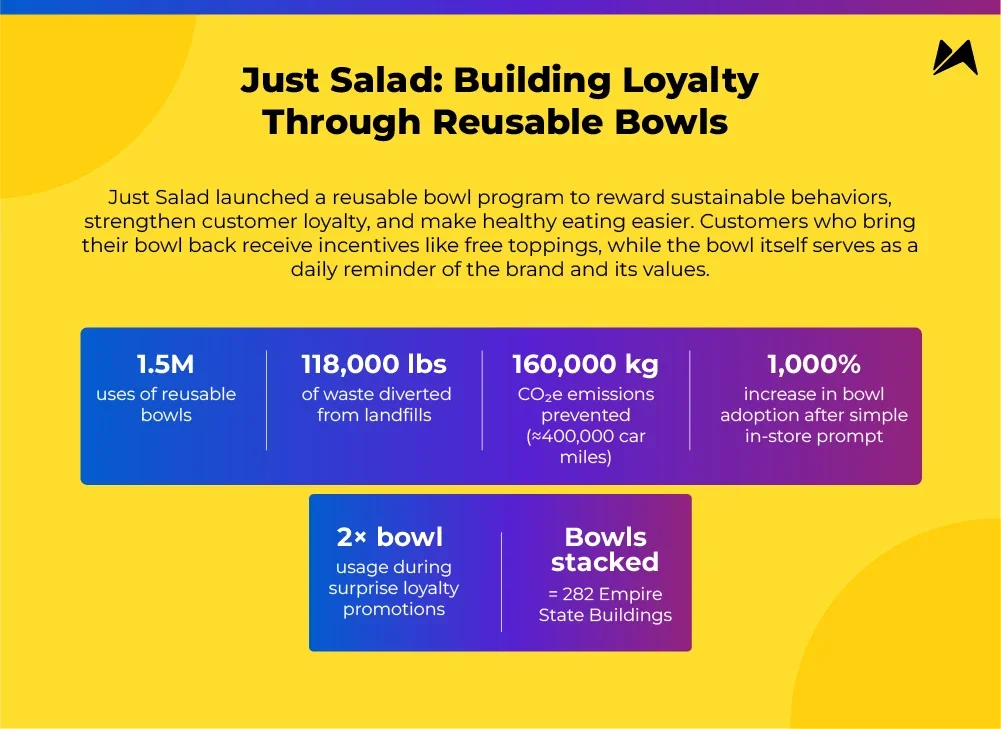
Source: Media Post Live
Initiatives like H&M’s clothing take-back program demonstrate how incentives such as points and rewards can guide customers toward circular, sustainable actions through eco rewards programs that reinforce repeat engagement.
3. Build community around shared values
Sustainability loyalty programs work best when they create spaces for like-minded customers to connect, share, and inspire each other. Community transforms individual sustainable actions into collective movements, amplifying both impact and emotional investment.
Building a sustainability-driven community starts with recognizing that environmental priorities aren’t one-size-fits-all. What resonates with customers often depends on where they live—coastal communities, for example, tend to care more deeply about plastic waste than inland ones.
At the same time, younger, digitally native generations are shaping shared global conversations that increase expectations for brand accountability across markets. With these dynamics in mind, effective sustainability-driven communities are built through intentional design, such as:
- Encouraging peer-to-peer content sharing, where members post tips, sustainable lifestyle ideas, or progress updates, creating authentic advocacy.
- Hosting local events and workshops on topics like upcycling, composting, or zero-waste living, giving members opportunities to connect in person around shared values.
- Creating exclusive online spaces for your loyalty members to discuss sustainability, ask questions, and celebrate milestones in brand-moderated forums or groups.
- Spotlighting member stories and achievements by featuring customers who have made meaningful sustainable contributions, offering recognition while motivating others.
- Enabling collaborative challenges, where groups of members work toward shared goals such as community-wide plastic reduction or neighborhood clean-up initiatives.
- Segmenting by engagement level, so that highly motivated advocates receive advanced challenges while newcomers are guided with simple, accessible actions.
| Brands with sustainability-focused loyalty programs | ||
|---|---|---|
| Brand | Loyalty Program/Initiative | Key Sustainability Focus & Rewards |
| Patagonia | Worn Wear Program | Rewards customers with store credit for trading in used Patagonia gear in good condition. Encourages buying used and offers repair services to extend product life. |
| Madewell | Madewell Insider (Denim Recycling) | Offers a discount on a new pair of jeans when customers return any old jeans (from any brand) to be recycled into housing insulation. |
| H&M | H&M Membership | Rewards members with a coupon or “Conscious Points” for returning unwanted clothes (from any brand) for reuse or recycling (Garment Collecting Program). Also gives points for bringing their own shopping bag or purchasing products from the “Conscious Collection.” |
| IKEA | IKEA Family | Offers special discounts and rewards specifically for buying eco-friendly products (e.g., energy-efficient appliances, sustainably sourced materials). |
| Starbucks | Starbucks Rewards | Incentivizes eco-friendly habits by offering bonus points (“Stars”) or discounts for using a reusable cup. |
| REI | Co-op Membership | Members can trade in used outdoor gear for a gift card via Re/Supply. The co-op invests a significant portion of its profits into environmental nonprofits. |
| Tentree | Impact Wallet App | Tries its points program directly to its tree-planting mission. Customers earn points with purchases, and each purchase plants ten trees, allowing them to track their positive impact via the app. |
| Kiehl’s | Recycle & Be Rewarded | Rewards customers with product samples or travel-sized products for returning their empty Kiehl’s containers to the store for recycling. |
4. Offer circular economy options
True sustainability in loyalty programs means designing for circularity—keeping products and materials in use as long as possible through repair, resale, and recycling.
These circular touchpoints create ongoing engagement while reducing environmental impact and reinforcing sustainable customer rewards that extend beyond discounts.
Now, the reality of implementing circular programs isn’t always straightforward. While demand for more sustainable options often increases, operational and supply-chain constraints can make scaling difficult. In many cases, shifting to more sustainable materials or processes also changes cost structures, which can reposition a product as more premium.
As a result, brands may need to rethink their target audience, value proposition, and expectations to ensure the program remains both viable and relevant.
With that in mind, consider these ideas relative to circular economy options:
- Launch take-back or trade-in initiatives that reward customers for returning used products, helping recover materials while reinforcing ongoing engagement with the brand.
- Offer repair or refurbishment options tied to loyalty benefits, encouraging customers to extend product life instead of replacing items and strengthening long-term relationships.
- Enable branded resale or second-life marketplaces where loyalty members can exchange pre-owned products, keeping items in circulation and rewarding participation.
- Introduce refill or reuse programs that provide discounts or bonus points when customers return containers, reducing waste and encouraging repeat behaviors.
- Work with certified recycling partners and clearly communicate how collected materials are reused or recycled to build credibility and trust.
- Roll out circular initiatives gradually, focusing on one meaningful change at a time to avoid overwhelming or confusing customers.
5. Personalize sustainable recommendations
Effective loyalty programs use data and segmentation to meet members where they are, offering personalized pathways that feel relevant rather than preachy or overwhelming.
Sustainability is fundamentally about people and their behaviors.
Most consumers don’t actually think their current behaviors are bad—they expect fruit year-round, fast fashion, and convenient packaging. Making sustainable choices feel like sacrifices often backfires. Instead, successful programs locate the win-win: solutions that are both better for the environment and offer tangible benefits like cost savings or improved product performance.
Consider Finish’s approach with automatic dishwasher products.
Research showed that many of their customers were rinsing dishes before putting them in the dishwasher, effectively using water twice. By communicating that this step wasn’t needed when using their product, Finish reduced unnecessary water use while making the experience easier and more convenient for customers. Programs that follow this model succeed when rewards for sustainable behavior are paired with practical value.
To apply this thinking at scale, consider these tips:
- Segment by sustainability engagement level to tailor messaging—enthusiastic advocates receive advanced challenges while newcomers get gentle introductions and easy wins.
- Recommend eco-friendly alternatives based on purchase history, suggesting sustainable swaps that align with what customers already buy, making green choices feel natural.
- Adjust communication frequency and tone according to individual preferences, respecting that some customers want detailed sustainability intel while others prefer lighter touches.
- Use predictive analytics to identify the right moments to introduce sustainable options, like suggesting trade-in programs when customers typically upgrade or refill reminders.
- Test and iterate based on response data to understand which sustainability messages, incentives, and program features resonate with different customer segments.
- Quantify individual impact to help customers see the tangible difference their actions make. When people understand their personal power to create change, they’re more likely to maintain sustainable behaviors.
6. Create transparent impact metrics
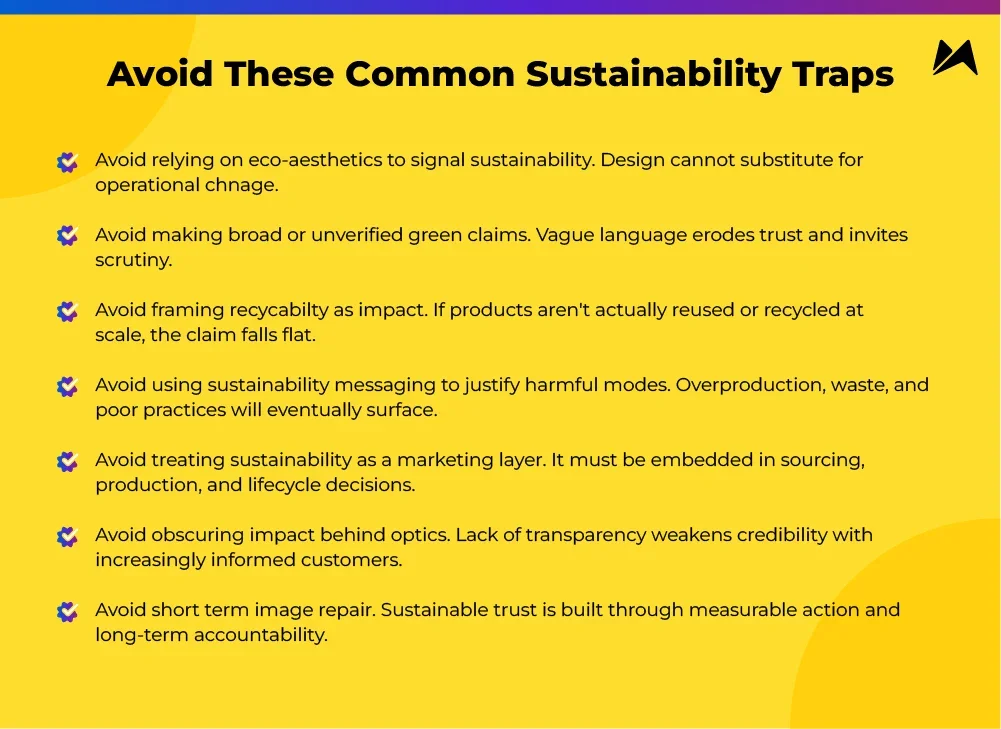
Customers want proof that their sustainable actions matter. Modern loyalty programs must move beyond vague claims to show real, measurable impact. When members can see exactly how their choices translate into environmental benefit, engagement deepens and trust solidifies.
However, the challenge is that customers often engage in “wishcycling,” placing non-recyclable or contaminated packaging into recycling bins because they want to do the right thing, even when it creates more harm than good. But at the same time, overcrowding packaging with sustainability badges can backfire, making claims feel exaggerated and reducing trust.
So this is why radical transparency is essential in green loyalty programs where trust underpins participation. Here’s how to build transparency into your program:
- Track and display individual impact dashboards showing loyalty members their personal contribution, making abstract sustainability concrete and personal.
- Use third-party verification and certifications in order to validate claims, partnering with recognized organizations that can audit and confirm your environmental impact data.
- Report aggregate program results regularly through newsletters, app updates, or annual reports that show the collective impact of all member actions combined.
- Break down the supply chain by revealing where products come from, how they’re made, and what happens at end-of-life, giving customers visibility into the full lifecycle.
- Avoid ambiguous language like “eco-friendly” or “green” without specific metrics—instead use precise figures like “30% recycled content” or “carbon neutral shipping.”
- Acknowledge trade-offs honestly rather than claiming perfection—customers appreciate brands that share both progress and challenges in their sustainability journey.
Patagonia has released its first-ever Work in Progress report, offering an open assessment of how the company impacts the environment. Rather than presenting a polished highlight reel, the report openly details both what’s working and what isn’t—creating transparency and holding the brand accountable for its environmental commitments. Check out their report.
7. Measure and optimize continuously
Sustainable loyalty programs need continuous measurement to link environmental impact with business performance and refine what actually works.
The reality is that sustainable initiatives sometimes fail even with the best intentions. When companies push changes too quickly, they risk losing market share.
Barilla’s experience demonstrates this tension: after launching more sustainable products, they initially lost six points of market share as consumers rejected the changes. The company had to balance their sustainability commitments against business performance, ultimately taking time to help customers adjust to new tastes and formulations.
This underscores why measurement matters. Without clear data showing which sustainability initiatives drive both environmental impact and customer retention, brands risk making costly mistakes. The key is finding opportunities where sustainability improvements align with customer desires—creating those win-win scenarios where environmental benefits come alongside better product performance, cost savings, or enhanced experiences. To begin with:
- Define clear KPIs that balance business outcomes with impact metrics (carbon reduced, materials recovered, sustainable product adoption).
- Conduct member surveys regularly to assess sentiment around sustainability features, identify barriers to participation, and gather ideas for program improvements.
- Analyze behavioral patterns to see which incentives drive the most sustainable actions, which segments engage most deeply, and where friction points exist in the experience.
- A/B test messaging to optimize everything from point values for sustainable actions to the language used to describe environmental benefits.
- Track your customers’ willingness to pay for sustainable options, recognizing that some segments may accept a premium while others prioritize affordability over green gains.
- Monitor target audience shifts as products become more sustainable.
- Report learnings transparently to both internal stakeholders and customers, showing how the program evolves based on data and feedback while maintaining accountability.
- Benchmark against industry standards to understand competitive positioning and identify opportunities to lead rather than follow in sustainable loyalty innovation.
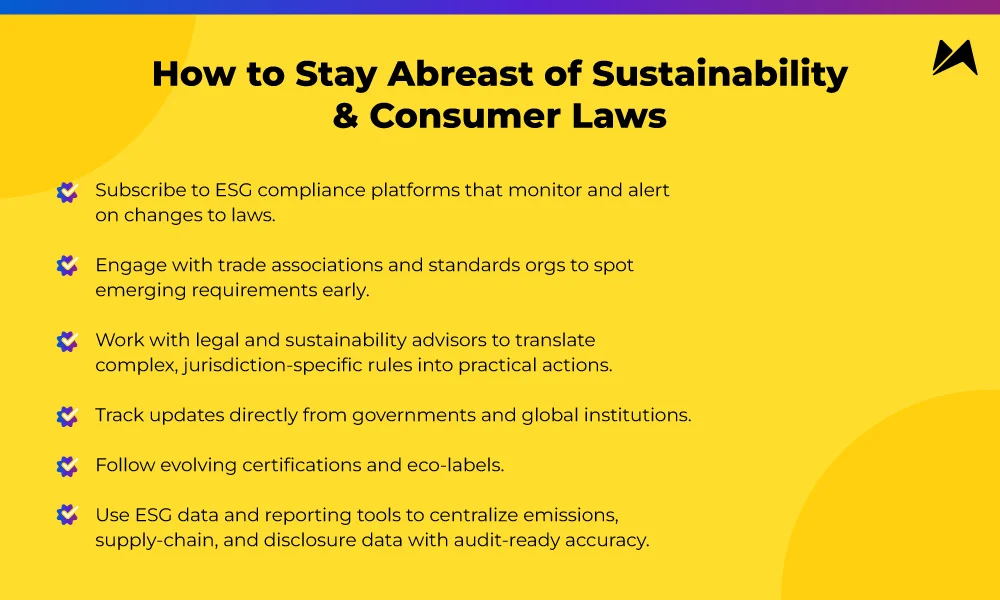
- Lastly, prepare for regulatory changes by tracking emerging sustainability standards and consumer protection laws.
Getting started with sustainable loyalty programs
Sustainable loyalty isn’t about turning customers into environmental heroes overnight. It’s about shaping everyday choices so that doing the right thing feels simple, rewarding, and naturally fits into people’s lives. Thus, when brands remove friction, demonstrate tangible impact, and respect customers’ intelligence, sustainability moves from being a message to becoming a habit.
The brands driving repeat purchases aren’t always the loudest about being green. They’re the ones quietly reimagining loyalty around value, trust, and participation—rewarding actions that benefit both the customer and the broader system. And over time, these thoughtful nudges build stronger relationships, higher lifetime value, and a competitive edge that’s hard to replicate.
In a market where price advantages are fleeting, loyalty rooted in shared values endures. Brands that treat sustainability as a product experience become the ones customers return to, not only for rewards but because they stand for something meaningful.
If you want to seamlessly integrate loyalty programs with your preferred MAP, we can guide you every step of the way. Book a free, no-obligation call!