 Lifecycle marketing
 Customer data management
 Email campaign production
 Search marketing
 CMS development
 Who we are
 How we work
 Case studies
 Testimonials
 Salesforce Marketing Cloud
 Braze
Braze HubSpot
 Marketo
 Pardot
 DataBricks
 Snowflake
 HighTouch
 RudderStack
 Segment by Twilio
 Videos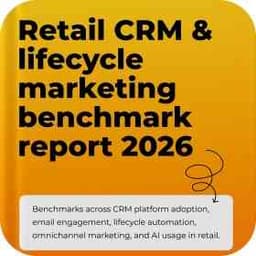
If your business relies heavily on email marketing, you know that inbox cleanup is a major life goal for many people. It can be so tedious that users keep putting it off. Inbox management takes a significant investment of time and effort. Once someone gives you permission to reach them, you have to keep earning your place in their inbox.
That makes frequency an important consideration. In fact, during major retail events such as Black Friday and Christmas, 55% of consumers find email to be the most overwhelming marketing channel, compared to social media ads (19%) and SMS (18%).
At the same time, retail teams face pressure to increase volume. Stronger campaign numbers may be expected quarter after quarter, and increasing the number of touches can seem like a straightforward way to maintain visibility and drive engagement. But increasing volume does not necessarily address the reason a recipient is disengaging.
Email also sits within a wider channel mix.
According to a study done by the Trade Desk Intelligence, integrated omnichannel campaigns using three or more synchronized channels are 2.2 times less cognitively fatiguing for consumers than disconnected multichannel strategies.
Frequency can’t be applied uniformly across an audience. A promotional calendar may establish when a brand plans to communicate, but the appropriate frequency can vary according to the recipient’s behavior, engagement, and circumstances.
Email volume vs relevance
Volume is usually the easiest lever to pull. If fatigue and disengagement are rising, reducing sends is an obvious response. If engagement is falling or the brand feels less visible, increasing them is equally straightforward. Volume can be adjusted quickly, measured easily, and reported clearly.
Relevance requires more information.
It depends on understanding what an individual has done, what they are currently interested in, which communications they have already received, and what is happening elsewhere in their relationship with the brand. That makes relevance harder to operationalize than simply changing send volume.
The problem with a volume-first approach is that frequency on its own provides limited information about whether another message is appropriate for a particular recipient.
What matters is how relevant the communication is to the person receiving it. Research cited by RetailWire found that 89% of shoppers say they buy from retailers that send multiple offers when those messages are tailored and relevant to their interests, compared with 65% for untargeted offers.
That 24-point difference illustrates why relevance needs to be considered alongside frequency. It creates a case for a more adaptive approach to frequency, where customer context can influence when and how the next communication happens.
How Agentforce Marketing calibrates email frequency
1. Real-time capabilities
Salesforce’s architecture for Agentforce Marketing connects Data 360’s streaming events with Flow-based automation and Agentforce agents. Customer activity can update a profile continuously, trigger a flow, change a journey, or prompt an action without waiting for the next scheduled audience refresh.
Take cart abandonment, for example.
A customer leaves a product in their cart, and that event can be ingested by Data 360 as a streaming event. The unified profile is updated, a Data 360 Triggered Flow evaluates the condition, and the appropriate response can be sent within minutes.
The same architecture can change the frequency in the other direction.
Suppose a customer is scheduled to receive a promotional email but opens a service case first. That service event can trigger suppression of the promotional communication and move the customer into a service journey. The marketing system is no longer operating independently of what is happening elsewhere in the customer relationship.
This cross-departmental integration is essential. Flow, built on the Salesforce platform, can respond to events from various areas of the business. It gives retail teams a way to make each email send more responsive to what is happening with the customer.
2. Multi-channel orchestration
Email is only one part of the customer journey.
Agentforce Marketing can support email strategies by incorporating two-way messaging through SMS and WhatsApp into a coordinated engagement framework.
When a customer responds or clicks through from a campaign, the relevant interaction data can inform subsequent engagement. On WhatsApp, Salesforce’s integration supports capabilities such as guided in-chat experiences and other transactional or service interactions, depending on the implementation. SMS can support shorter, action-oriented communications that complement an email interaction.
The benefit here is coordination.
A customer who has already responded through another channel may not need another email immediately. Someone who has ignored several emails may require a different engagement strategy. Someone who has demonstrated a clear buying signal may warrant a more immediate response.
Agentforce can support these decisions when the required customer data, rules, channel integrations, and actions have been configured. When an interaction requires human involvement, the implementation can also be designed to route the conversation to a representative with the relevant context.
The result is a channel strategy in which email frequency can be considered alongside the customer’s broader interaction history.
3. One-to-one communication at scale
Frequency is also affected by what each message contains.
Rigid templates make it difficult to adapt every communication to the context of an individual recipient. AI-assisted drafting can create greater variation by using approved customer and engagement data to generate messages for specific situations.
For example, if a customer browses a product category, abandons a cart, buys from a particular category, or engages with a seasonal promotion, an appropriately configured AI workflow could use that information when generating the next message.
Salesforce’s consumption pricing makes generating large volumes of unique drafts more cost-effective than manual drafting. This approach allows retail teams to spend less time manually adapting campaign variants and more time reviewing, approving, and optimizing customer experiences. However, as with any vendor pricing model, you should validate the costs against your own volumes before building a business case.
Remember this while considering Agentforce Marketing
Real-time marketing depends on more than the ability to react quickly. The underlying data, operating processes, and people handling the resulting interactions also need to support the intended frequency.
Three areas deserve attention before implementation.
1. Data latency
Real-time frequency decisions are constrained by how quickly relevant customer data reaches the system.
Fragmented data architectures can introduce delays, and many retail environments still rely on scheduled or micro-batch processing. Even when the marketing platform can make a decision quickly, it cannot react to a shopping event that has not reached it yet.
Salesforce addresses marketing data latency through Data 360 capabilities including zero-copy architecture and real-time identity resolution. The achievable response time, however, still depends on how the broader data architecture is implemented.
Agentforce can reduce the time spent on decisioning, but it cannot make stale upstream data current. If a customer adds a product to a cart, makes a purchase, or interacts with a promotion and that event reaches the platform several minutes later, the agent can only act once that event becomes available.
2. Approval bottlenecks
Retail teams use AI to draft customer-facing messages that require review and approval. When agents generate hundreds of personalized email variations for different products, segments, or promotions, but only a fraction can be reviewed, operational backlogs occur. As drafts await approval, the real-time advantage is lost and time-sensitive offers or recommendations may become outdated.
The same challenge applies to promotions, pricing, merchandising claims, and other communications that require approval from brand, legal, merchandising, or other internal teams. While approval is necessary for certain communications and actions, workflows must accommodate the volume and speed at which these messages are produced.
3. Team capacity
Real-time, tailored messaging can generate more customer interactions as well as more timely engagement. A shopper who responds to an offer, asks a question, needs help with an order, or requests product information may expect a quick response.
If those interactions reach a team that does not have the capacity to handle them, faster marketing can simply create a larger service backlog. Before increasing send frequency, retail teams therefore need to understand how much additional customer activity a more responsive strategy could generate, and whether the right teams and workflows are equipped to handle it.
Getting started with Agentforce Marketing in retail
To enable real-time operations without causing data lag, approval backlogs, or bandwidth issues, align your technology stack and team operating model:
- Strengthen the data foundations: Stream live behavioral signals into Data 360 using Platform Events instead of nightly batch updates. This ensures Agentforce operates with real-time context and minimum data lag.
- Streamline your approval processes: Define which everyday customer communications can move through automatically and which promotions, offers, or claims need human review. This helps prevent approval queues from slowing down time-sensitive retail campaigns.
- Calibrate both team and system capacity: Match send volume and response-triggered activity to what your service and social teams can actually absorb, especially during peak. Let Agentforce handle first-line replies and routine order or product queries on its own, and route anything needing judgment to a person with the customer’s context already attached.
Responsive marketing requires the surrounding operation to be responsive too. Faster decisioning has limited value when the data arrives late, approvals take too long, or there is no capacity to handle the resulting customer response.
For retail teams, that makes frequency an operational question. The opportunity with Agentforce Marketing lies in giving marketers more ways to adjust the frequency around what the customer is actually doing.
For more information on how retail teams are approaching this, our Retail CRM and Lifecycle Marketing Benchmark Report (2026) breaks down benchmarks across email, SMS, automation, AI usage, lifecycle workflows, and revenue performance.