 Lifecycle marketing
 Customer data management
 Email campaign production
 Search marketing
 CMS development
 Who we are
 How we work
 Case studies
 Testimonials
 Salesforce Marketing Cloud
 Braze
Braze HubSpot
 Marketo
 Pardot
 DataBricks
 Snowflake
 HighTouch
 RudderStack
 Segment by Twilio
 Videos
Choosing Braze’s Tech for an Equitable Future isn’t just buying software—it’s aligning your growth with a platform built for real-time, data-driven, cross-channel engagement at scale. For founders who value both traction and principle, the appeal is clear: enterprise-grade personalization, strong privacy and security, and a program tailored for underrepresented and impact-driven teams.
The real question isn’t whether Braze is powerful—it clearly is—but whether its cost, complexity, and long-term strategic implications line up with where your company is today. Many mission-driven teams are evaluating Braze for startups not just technically, but holistically. In other words, is Braze right for startups?
As a certified Braze partner with experience serving over 50 clients, we want to help you assess whether your startup is the right fit for the program. Let’s break it down, one step at a time.
Braze for early-stage startups: The cost reality
Before you get excited about capabilities, it’s important to understand the financial reality behind adopting Braze:
- Annual costs typically range from $60,000 to $200,000 depending on your setup.
- No free plan unless you qualify for their Tech for an Equitable Future program (12 months free for underrepresented founders).
- Pricing factors include monthly active users (MAUs), custom data points, onboarding, and advanced features.
- Implementation fees can add thousands more on top.
For most seed-stage founders operating lean, this is prohibitive. Braze isn’t competing with Mailchimp or even Klaviyo here—it’s an enterprise platform priced accordingly. If bootstrapping or early fundraising describes you, pause here. Most users would negotiate 10% off, but you need runway and leverage to push back. The Tech for an Equitable Future program offers 12 months free for founders from underrepresented groups, plus dedicated success managers and certifications, but only if you’re in their target demographic and your product fits their vision.
Implementation cost: You’ll need help
Most marketing-led teams underestimate the platform’s learning curve:
- Expect 60-90 days just to reach basic operational capability, even longer if you plan to scale across multiple channels.
- Data integration and mapping are highly technical, and errors made early will compound across campaigns and reporting.
- Successful implementation requires early cross-functional alignment between marketing, engineering, product, and data teams—otherwise momentum stalls quickly.
Why this matters to founders: Every day your team is learning Braze is a day they’re not building customer relationships or validating product-market fit. Many startups hire Braze consultants to handle this, which can cost $10K-$50K+ depending on scope.
The data privacy & compliance advantage
Braze embeds privacy at the architectural level, not as an add-on. That matters if compliance and trust are core to your mission:
- SOC 2 Type II and ISO 27001 certified, with independently audited security controls proven to work in real-world conditions.
- Built-in GDPR and CCPA compliance, including consent management, data subject access, and large-scale erasure capabilities.
- HIPAA-ready infrastructure with dedicated data clusters for healthcare use cases.
- Zero-copy data model enables personalization without storing sensitive data within Braze.
- Role-based access controls and just-in-time provisioning help minimize exposure and prevent unauthorized access.
If your startup handles customer data, this compliance foundation is genuinely valuable. You don’t have to reinvent the wheel on consent management or privacy workflows.
However, marketers using AI tools still worry they’re using customer data without proper consent, so Braze’s compliance features only work if you actually use them thoughtfully.
AI & responsible personalization: The gray area
Braze has made significant investments in AI-driven capabilities such as predictive segmentation, AI-assisted copywriting, and automated Liquid code generation.
But there is a strategic tension for mission-driven founders to consider:
- These tools enable hyper-personalization, which can feel intrusive if not governed rightly.
- Braze might come off as positioning first-party data and consent-based collection as inherently ethical. Yet its AI tools enable personalization right up to the edge of what users might tolerate if fully informed. As a founder, your role is to add the layer of restraint and governance between what is technically possible and what aligns with your mission.
- The company also publishes ESG commitments, including SBTi-approved climate targets with a 50.4 percent reduction in Scope 1 and 2 emissions by FY2033.
- Braze itself is opaque on what “ethical AI” means operationally. There’s messaging about transparency, but limited technical documentation on guardrails.
Braze gives you powerful tools to be creepy or respectful. The responsibility is yours.
So if you’re building a startup around user trust and privacy (think: health tech, financial wellness, mental health), Braze works well if you set internal guardrails. But Braze won’t police you.
Vendor lock-in: The long-term risk
This is the question most founders don’t ask until it’s too late. While Braze is powerful, it also does create strong dependency risks you should understand before committing:
- Journeys, decision trees, and A/B tests built in Canvas are not portable.
- Your product code (both mobile and web) depends on Braze SDKs and API endpoints for real-time events and attributes, making migration a major engineering effort.
- Personalization, segmentation, and message logic leverage Braze’s data model and Liquid syntax, which do not translate cleanly to other systems.
- Long contracts, upfront implementation fees, data migration, campaign rebuilds, as well as retraining create significant financial and operational barriers to exit.
Now, you can argue that the composable nature of Braze delivers lower vendor lock-in compared to traditional, monolithic CRM suites, like Salesforce, which it does.
However, it is important to appreciate that while highly composable, Braze is not a system you would call the core composable CRM or composable CDP. It is still the central system where all your engagement logic and real-time user data lives. And moreover, “composability” does not eliminate lock-in altogether. It shifts the dependency from a single vendor’s all-in-one suite to a multi-vendor strategy built on open standards.
For startups based in APAC & EMEA
Being a marketer in APAC and EMEA is tough because you have to navigate complex cultural differences while dealing with the global pressures of data privacy, budget scrutiny, and AI-driven transformation. At the same time, women founders, Black founders, and marketers face significant, systemic challenges that often tend to be overlooked in general business discussions.
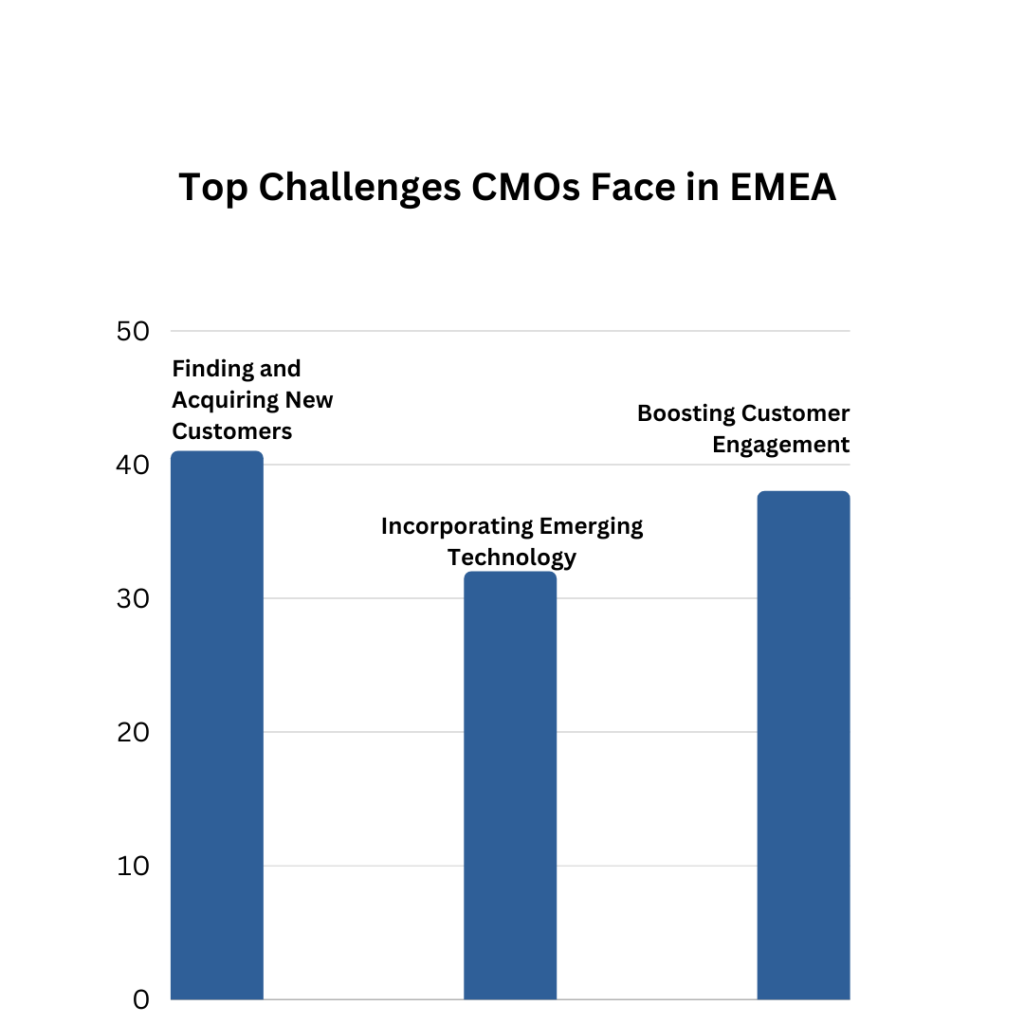
Source: Machintel
This is why initiatives like Braze’s Tech for an Equitable Future exist, supporting businesses such as EatOkra, Black Rise, and girlgroup.
Braze can absolutely work for you if you’re an APAC/EMEA-based startup, but it’s only “right” if you have specific needs around compliance, multi-region scale, and can absorb the complexity and eventual cost. In light of that, keep the following pointers in mind:
- GDPR is covered, but if you operate in markets with additional rules (e.g., PDPA variants, data localization requirements, sector-specific constraints), you still carry the burden of designing compliant data flows and consent models on top of Braze’s tooling
- Hosting Braze in the EU or future APAC data centers doesn’t solve where your own core product data lives.
- Grant or startup programs delay, but don’t alter, the fact that Braze is an enterprise-priced platform everywhere.
- In APAC and parts of EMEA where ACVs and ARPU are often lower, it’s easy for Braze to become a disproportionately large line item relative to local pricing power.
The bottom line for founders
Braze’s Tech for an Equitable Future initiative reflects a real values alignment, which matters. This program has created meaningful access, making Braze tech for Black founders and other underrepresented groups a real opportunity rather than a slogan. But the real question is whether that alignment justifies the cost and complexity at your current stage.
Ask yourself: Do you have a $60K+ annual budget for marketing tools, the engineering capacity to manage advanced integrations, and a real need for enterprise-grade compliance? If yes, Braze is worth the effort. However, if you’re hedging, spend six months with a lighter platform first, then upgrade when you can afford to do it right.
We’re lifecycle marketers with deep expertise across Braze and other leading platforms. If you’re unsure whether to choose Braze, let’s talk! Book a no-obligation consultation with us.