 Lifecycle marketing
 Customer data management
 Email campaign production
 Search marketing
 CMS development
 Who we are
 How we work
 Case studies
 Testimonials
 Salesforce Marketing Cloud
 Braze
Braze HubSpot
 Marketo
 Pardot
 DataBricks
 Snowflake
 HighTouch
 RudderStack
 Segment by Twilio
 Videos

As an e-commerce brand/business owner, you know the importance of engendering trust and security in your store visitors so they feel confident enough to browse, shop, and actually empty their carts at checkout!
However, it’s a fine line to walk, and it’s more of a catch-22.
Because paradoxically, shouting from the rooftops that you are trustworthy might seem like an attempt to cover up for some not-so-trustworthy business.
So, you must come up with ways to show that your site is safe, secure, shoppable, and definitely not scammy without accidentally undermining trust in your business.
The question of pertinence now is, how does one do that?!
If you run your store on Shopify, Shopify trust badges can help you turn the tide in your favor by building consumer trust and potentially boosting conversions and sales.
In today’s blog, you can expect to learn about what trust badges are, their different types, their importance, and optimal trust badge placement.
But wait, what’s a trust badge?
Simply put, a trust badge or trust seal is a digital icon, logo, or image that business owners place on their website to build trust among visitors and signal reduced purchasing risk, ultimately motivating buying decisions.
Placing a trust badge strategically can reassure customers that they can enjoy a low-risk, super-secure online shopping experience.
To procure trust badges, one must research and select a reputable provider, known as a certificate authority (CA). After you sign up with a CA, you verify your website and introduce the generated badge code to your website’s HTML.
The whole motive behind social proof placement is to help optimize user confidence in your website’s credibility and security.
Why should I use a trust badge on my Shopify web store?
Well, website trust signals such as trust badges are known to build an online visitor’s trust in your store and potentially enhance sales and conversion rates.
Here’s how that works;
- Enhanced trust in your business
So, a trust badge addresses online shoppers’ known fears without using language that might inadvertently reinforce them. If a customer is concerned about falling prey to a scam, they might be reassured when they see a Better Business Bureau badge.
On the other hand, if a shopper is concerned about data security, then seeing a security trust badge on your store might put their fears to rest.
2. Optimized conversion rates
According to Baymard Institute’s latest research, the average documented online shopping cart abandonment rate is 70.22%. Also, 19% of them left their carts because they didn’t trust the site with their credit cards!
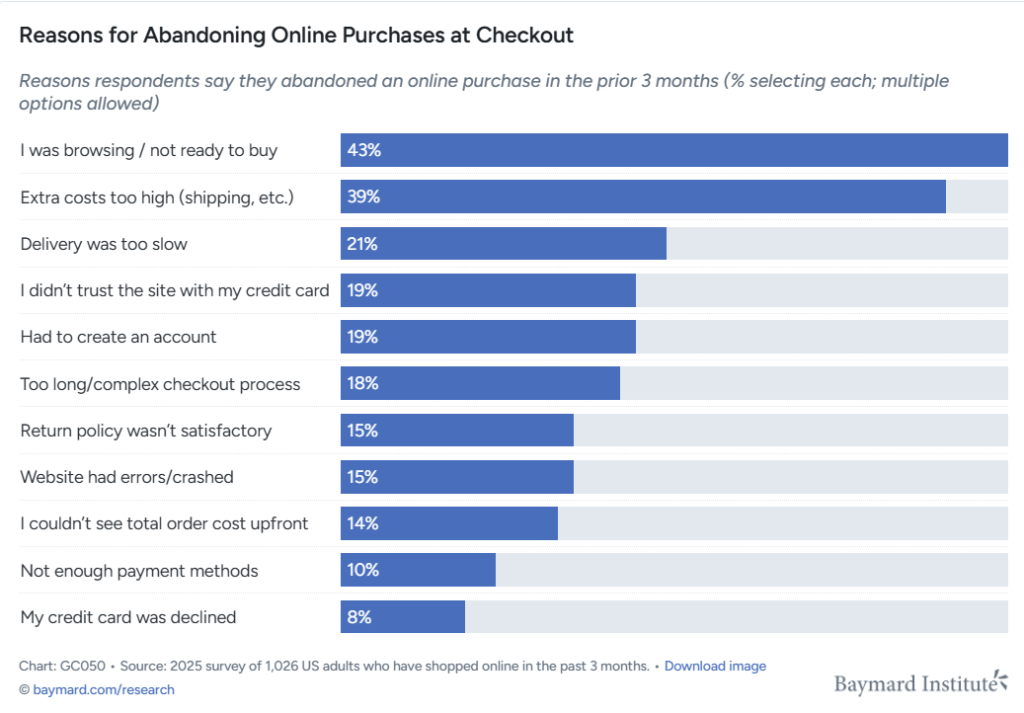
As we process these numbers, it is clear as daylight that eliminating these security concerns could potentially help improve sales. Additionally, free shipping and return badges can further lower the barrier to purchase and bring in that money that was earlier left on the table.
3. Clarity on policies
Trust badges are also an efficient way to communicate key purchasing information, such as your shipping and return policies, as well as the payment methods you accept.
These neat badges fit ergonomically on your store’s checkout pages and are the perfect replacement for the blocks of text that would otherwise be required to deliver the same information.
4 common trust badges and where to place them
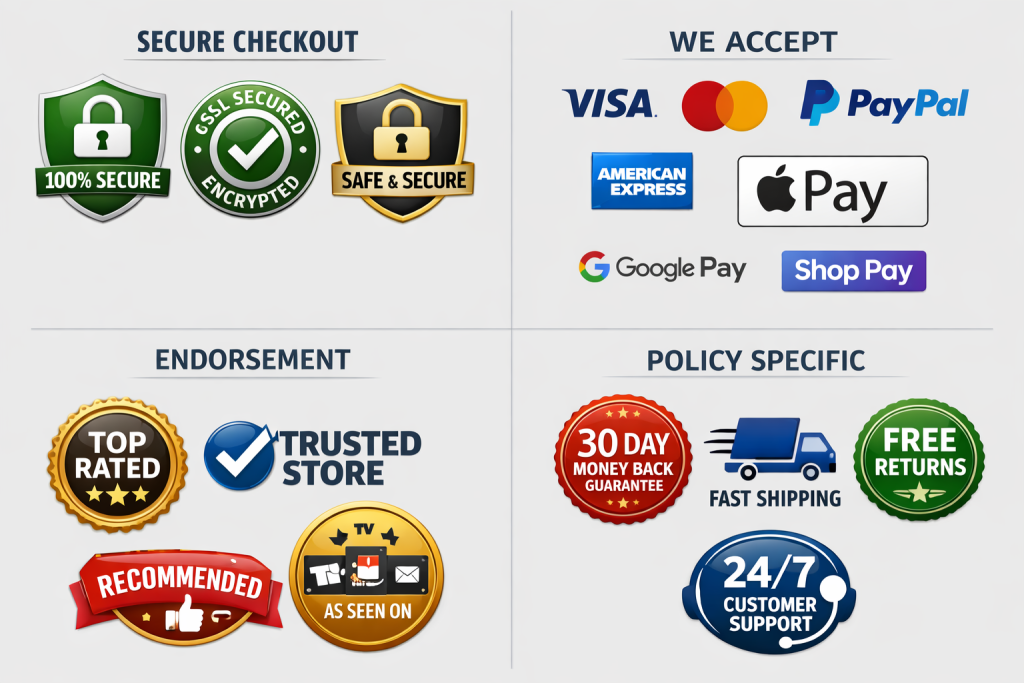
Now that we are familiar with the fundamentals of trust badges and their importance in securing those deals, let’s delve into their types and, most importantly, where to place them for optimal effect.
- Security trust badges
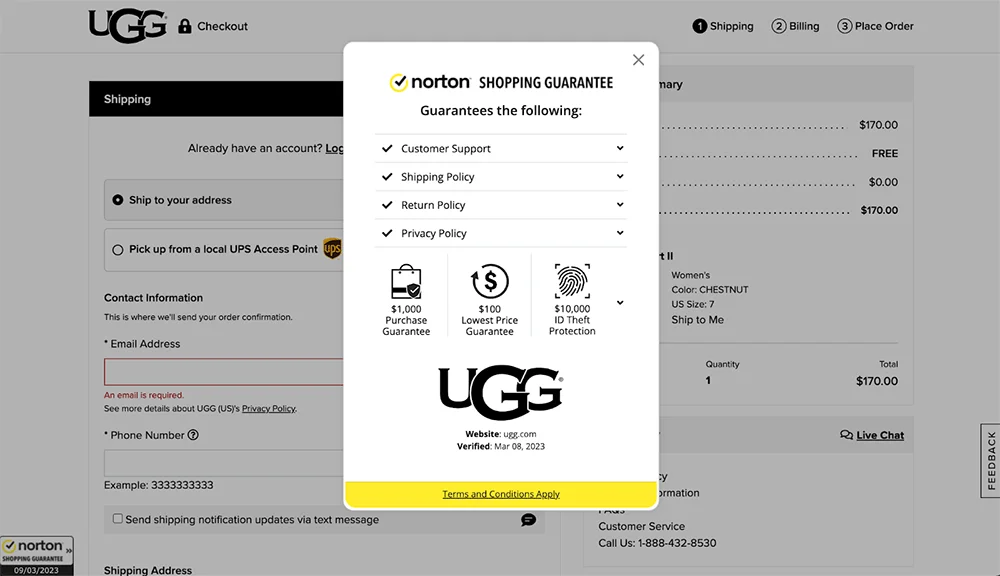
So, nobody wants to shop at a store that’s open to man-in-the-middle attacks or to anyone trying to steal their credit card details. This is where website security badges step in, helping prospective shoppers feel safe by confirming that their personal data is secure.
Also known as safe checkout badges, secure payment badges, or secure checkout badges, they indicate that the store has a Secure Sockets Layer (SSL) certificate that ensures the security of the customer’s personal information. These badges are also commonly referred to as SSL trust badges or simply SSL badges.
As a business owner with a digital presence, if you choose not to implement SSL, there will be repercussions. It is a widely trusted, widely implemented cryptographic protocol that ensures secure communications over a network, and not implementing it results in the risk of trouble long before your customer reaches checkout!
You must have noticed that the most common browsers warn users not to visit sites that don’t have SSL encryption. If they decide to visit your website anyway, the browser changes the lock icon that pops up right next to an encrypted website’s URL to an alert icon with a warning that says “Not secure.” Now, that’s definitely not a good thing for your website!
To give your customers the security and assurance they deserve, you may choose a reputable Certificate Authority (CA), such as DigiCert or GlobalSign, and buy the right-fit SSL certificate from them (yes, they offer different kinds of certificates).
Once installed and authenticated, your Certificate Authority will issue a site seal or trust badge that you may prominently display on your checkout pages to let shoppers know their personal information is safe and secure.
2. Payment badges
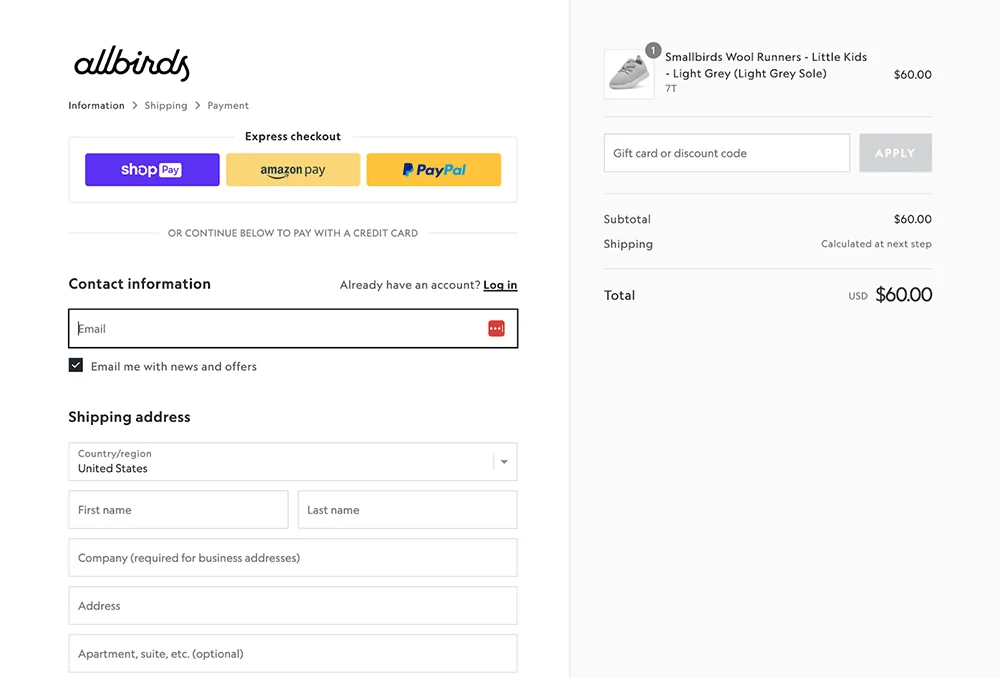
When you flaunt accepted payment trust badges, you enjoy two benefits.
Firstly, they provide your customers with important information about the accepted payment methods they can avail of. Secondly, they serve to align your company with trusted brand names, thereby effectively communicating an endorsement from brands as large and established as PayPal or Visa. Pretty cool, we say!
Now, accepted payment badges are instances of free trust badges because the issuing authorities (payment providers) also have something to gain from validating your site. Therefore, they will typically offer this asset free of charge.
If you have a Shopify store, you can choose from a wide range of credit card options to display, such as Visa, Mastercard, American Express, Discover, Google Pay, Apple Pay, and PayPal, depending on the payment options you accept.
So, these badges are usually displayed by e-commerce stores on checkout pages, near the credit card details form or other payment fields.
3. Endorsement badges
So, sometimes third-party brands offer endorsement badges to recognize and approve your business.
Two popular third-party endorsement badge options are the Google Verified Customer Reviews badge and the Better Business Bureau Accredited Business badge.
To obtain these badges, one must submit an application to the endorsing entity and wait for their review and approval. After the approval process, you receive an icon to place on your website.
Since endorsement badges indicate wholesale approval of your company, many brands or businesses prefer to place them in their website footers rather than in the checkout process.
4. Policy-specific badges
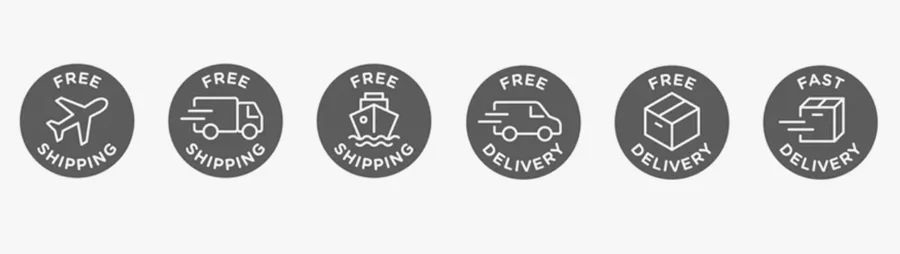
Well, policy-specific badges include free returns, free shipping, and money-back guarantee badges.
So, these badges typically do what’s expected of them. Simply put, a free shipping trust badge lets customers know they won’t have to pay prohibitive shipping fees after they share their payment details. On a similar note, a money-back guarantee badge signals a low-risk purchase by letting prospective shoppers know they have little to lose if the purchase is not to their liking.
Interestingly, this badge is free and doesn’t require any third-party verification, because this is a claim that you can reliably make about your own business. The purpose of this badge is to offer a convenient graphic to accompany the claim.
It’s pretty easy to install one of these icons with a trust badge app.
These badges can be displayed on checkout pages, in the website footer, or on About pages.
Answering some common questions that might have been on your mind!
- Do all trust badges offer the same level of trust-building to prospective consumers?
No. Trust badges are built on brand recognition. Generally speaking, the more widely recognized a trust badge issuer is, the greater its efficacy in engendering consumer trust.
2. Where should I place these trust badges for maximum impact?
Well, as discussed above, the placement depends on the type of trust badge. Generally, online retailers prefer to place trust badges that validate overall business reputation in the website footer. Similarly, accepted payment badges and security trust badges can be placed on the checkout pages to let shoppers know that their personal information is safe and which payment options they can choose.
The road ahead
On that note, if you are considering partnering with Mavlers for your Shopify needs, you might want to consider reading our detailed guide next ~ How can Mavlers help address your Shopify needs?