 Lifecycle marketing
 Customer data management
 Email campaign production
 Search marketing
 CMS development
 Who we are
 How we work
 Case studies
 Testimonials
 Salesforce Marketing Cloud
 Braze
Braze HubSpot
 Marketo
 Pardot
 DataBricks
 Snowflake
 HighTouch
 RudderStack
 Segment by Twilio
 Videos
During the five days between Thanksgiving and Cyber Monday alone, Klaviyo’s platform helped brands process over 18 billion messages and generate $3 billion in attributed value. Behind those record-breaking numbers is a critical challenge: your support team is drowning.
Order tracking questions, sizing inquiries, returns requests—they cascade in faster than humans can respond, and every delayed response is a lost opportunity.
This is where K:AI Customer Agent transforms your operation.
Instead of scrambling to hire temporary support staff or burning out your existing team, you get a 24/7 conversational AI assistant that handles the volume, frees up your team for what matters, and turns service interactions into revenue-generating moments.
However, you need to learn how to improve BFCM conversions using Customer Agent. Let’s get started with the most important aspect, training the agent.
How to train Klaviyo’s Customer Agent
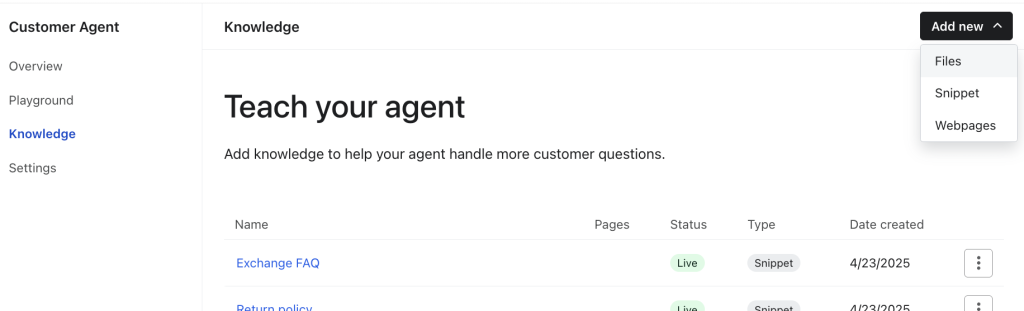
According to Klaviyo’s own Help documentation, the very first and most critical best practice is training and testing the agent. That’s because, as they clearly point out, the agent won’t be able to answer every question right away.
Source: Klaviyo
So, how do you train it effectively? Consider the following tips, to begin with:
- Train the agent on actual, successful chat and email transcripts to learn human-like tone, intent detection, and effective resolution language.
- Explicitly program conditions (e.g., negative sentiment, complex refund inquiries, asking for a human) under which the agent must escalate to a live representative.
- Specifically train the agent on topics it must not respond to (e.g., competitor analysis, internal financial data) or questions that require immediate human intervention.
- Set up a system where human agents can quickly mark an AI response as incorrect, allowing the model to be retrained on the specific error immediately.
- Use pre-written “snippets” to guide the AI’s communication style, ensuring the responses are consistently on-brand.
- Incorporate multi-turn conversation training so the AI can maintain context, ask clarifying questions when needed, and gracefully handle topic changes.
Reviewing your website before AI scraping
When you first enable the agent, it performs a massive, automatic scrape of your public website content, help center, and policy pages to build its foundational knowledge base. To ensure Klaviyo’s Customer Agent successfully ingests all necessary and updated information, focus on reviewing/preparing your website’s content and structure accordingly:
- Consolidate detailed answers into a well-organized, updated help center or dedicated FAQ section, as the agent relies on this content for high-accuracy responses.
- Make sure that product descriptions, materials, sizing charts, and features are clearly and explicitly written on your product pages.
- Gather any crucial information that is deeply nested, stored in complex PDFs, or part of a third-party system to be manually uploaded in Customer Agent’s knowledge base.
Manual resyncs
While the agent does update periodically, if you make a major update—such as a complete revision of your Returns Policy for BFCM or launching a new product line—you should manually trigger a re-ingestion to ensure the agent has the correct information immediately.
How do you know that Klaviyo’s AI shopping assistant for BFCM is ready to go? Well, you don’t— unless you test it thoroughly before launching it. So let’s move on.
Testing Klaviyo’s Customer Agent
To test Klaviyo’s BFCM Customer Agent, you can use the Playground to see whether the agent performs accurately. When testing, keep these tips in mind:
- Ask about standard policies to confirm general knowledge accuracy.
- Phrase the same core question multiple ways (e.g., “Where is my package?” vs. “Track my order” vs. “When will my stuff arrive?”) to ensure the agent understands the intent.
- Select a customer profile and ask a question that requires personalized data in order to verify personalized responses.
- Simulate a customer viewing a specific product page (using Page Selector) and ask detailed questions about that product.
- Ask complex or exclusionary questions about sales (e.g., “Can I use my rewards points on top of the 20% Black Friday discount?”).
- Ask a general question, get the answer, and then ask a follow-up pronoun question (e.g., “Does it come in other colors?”) to ensure context is maintained.
- Ask a potentially frustrating question (e.g., “Why is shipping so slow?”) and evaluate if the agent responds with the desired empathetic or brand-appropriate tone.
- Ask a question you know the agent has not been explicitly trained on to see if it defaults to an accurate “I don’t know” response or a correct escalation.
- Use the Channel Selector and ask a detailed question to verify the agent shortens the response to fit character limits while retaining necessary information.
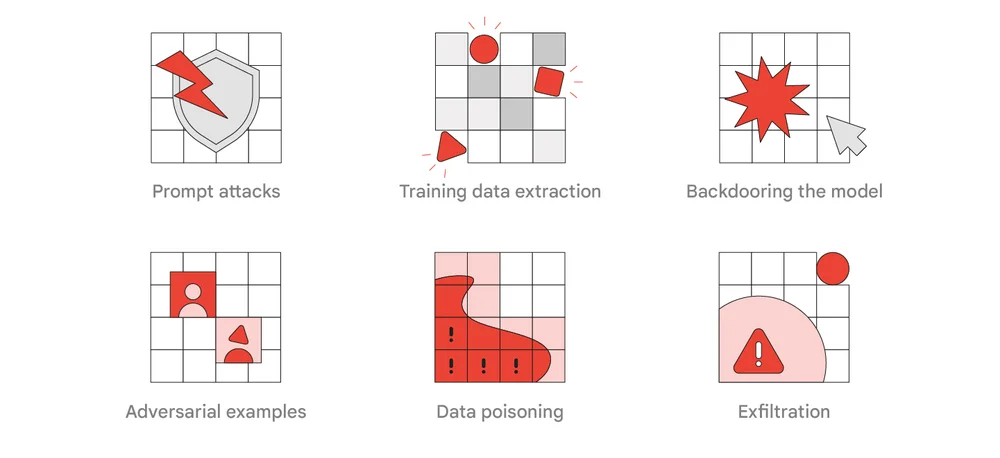
- Conduct red-teaming exercises. Attempt to jailbreak or manipulate the agent through prompt injection, impersonation attacks, and adversarial prompts to test behavior override resistance, security boundaries, and exposure of vulnerable data.
Source: Google
Run every customer-facing response through automated filters for toxicity, appropriate tone matching your brand voice, PII exposure prevention, and groundedness verification before the response reaches the customer, routing edge cases to human review,
Additionally, evaluate whether the agent answers customer questions on the first attempt without forcing them to rephrase prompts multiple times.
Getting started with Klaviyo for BFCM marketing
When trained with the right data and guardrails, Klaviyo’s AI agent stops being just a chatbot and becomes a revenue-driving, brand-consistent, always-on customer experience engine. The goal is NOT to replace your human team but to empower them: freeing them from repetitive queries, enabling faster resolutions, and transforming support into a profit center.
But before we close, keep the following limitations in mind when using Customer Agent:
- AI is a tool; strategy and business fundamentals remain the marketer’s responsibility.
- AI might underperform if your brand is new or has a weak data footprint (small list, little customer data); established brands do get maximum leverage.
- Use a test segment or a new campaign first before rolling it out to your entire list.
- Set the tone rules, ban certain words, and provide product restrictions to guide the agent’s behavior.
Need help leveraging Klaviyo fully for BFCM marketing this year?
We are certified Klaviyo experts, trusted by 100+ active clients, and we manage more than 1,000 Klaviyo campaigns each year. Book a no-obligation consultation with us!