 Lifecycle marketing
 Customer data management
 Email campaign production
 Search marketing
 CMS development
 Who we are
 How we work
 Case studies
 Testimonials
 Work samples
 Salesforce Marketing Cloud
 Braze
Braze HubSpot
 Marketo
 Pardot
 DataBricks
 Snowflake
 HighTouch
 RudderStack
 Segment by Twilio
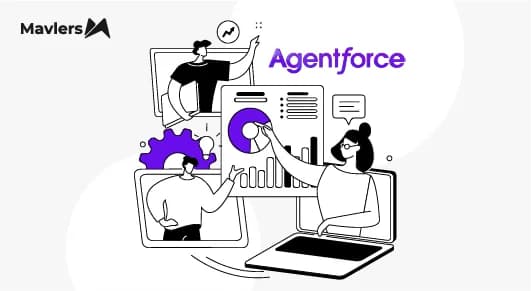
If you work in Salesforce Marketing Cloud or Marketing Operations, you’ve probably seen the conversation around Agentforce move from experimentation to something much more practical. The question is no longer whether AI can write an email, summarize an account, or answer a simple question. The more interesting question is:
Can AI actually work with the data, processes, and systems our marketing teams use every day?
That’s where Agentforce Coworker gets interesting. Salesforce is positioning Coworker as a conversational layer that sits across Salesforce and connected enterprise data. Instead of navigating through records, reports, dashboards, and different systems to piece together an answer, users can ask a question in natural language and get a response based on the business context available to them.
And when the task goes beyond finding information, Coworker can connect into Salesforce’s broader agentic capabilities to help move the work forward. For Marketing Operations teams, that’s potentially a meaningful shift.
But I wouldn’t recommend evaluating Coworker simply by asking, “What can it do?” I’d start with a different question: “Where are our marketing teams spending too much time finding information, connecting the dots, or getting routine work done?” That’s where Coworker has the potential to earn its place in the stack.
First, what exactly is Agentforce Coworker?
At its simplest, Agentforce Coworker gives Salesforce users a conversational way to search, understand, and work with business information. Instead of knowing exactly which Salesforce object, report, dashboard, or record to open, a user can ask for what they need.
For example: “Give me a summary of this account and tell me what I should know before my next meeting.”
Or: “Which accounts engaged with our latest campaign but haven’t had a sales follow-up?”
The difference from traditional search is important. Traditional search helps you find information. Coworker is designed to help you make sense of that information and, where appropriate, take the next step.
Salesforce describes Coworker as a way to search across enterprise information, synthesize context, and connect users to specialized agents and actions. Salesforce currently positions it as part of the broader Agentforce platform and its Data 360 foundation. That last part is what makes this particularly relevant to Marketing Operations.
Why Agentforce Coworker matters to Marketing Operations
Marketing Operations sits at the intersection of CRM, Marketing Cloud, customer data, analytics, sales activity, and the integrations that connect them. That means even simple questions can require data to be pulled from multiple systems, reconciled, filtered, and interpreted before anyone can act on it.
For example: Which target accounts are showing increased engagement but haven’t had a sales follow-up?
Answering that may involve campaign engagement, account and opportunity data, sales activity, and business rules across several systems. This is where Agentforce Coworker becomes interesting. Its value isn’t in replacing Marketing Cloud or the systems already running the operation, but in making the information within those systems easier to access and act on.
Some of the more practical use cases include:
- Campaign and account intelligence: Identify engaged accounts, surface relevant customer context, and understand where marketing activity isn’t translating into sales action.
- Marketing-to-sales handoffs: Bring campaign engagement, account activity, opportunity data, and sales context together to identify where follow-up is needed.
- Campaign and journey troubleshooting: Investigate questions such as why a contact didn’t enter a journey, why a segment is smaller than expected, or where records are missing critical data.
- Audience and segmentation: Let marketers explore business questions in natural language instead of translating every request into Salesforce objects, fields, filters, and reports.
- Everyday Salesforce questions: Give marketers easier access to account, campaign, and customer information without making Marketing Operations the permanent bridge between users and the CRM.
For teams supporting large and complex marketing organizations, reducing this constant back-and-forth between business users, data, and systems can add up to meaningful productivity gains.
There is, however, an important caveat: Coworker doesn’t fix a weak Salesforce or Marketing Cloud foundation. If account relationships are inconsistent, campaign definitions aren’t standardized, engagement data isn’t connected, or permissions aren’t properly governed, a conversational interface won’t solve those problems.
How Agentforce Coworker Fits Into the Salesforce Ecosystem
The easiest way to understand Agentforce Coworker is to compare it with how Salesforce users work today. Traditional Salesforce Search helps you find records; you then open them, review the information, and connect the dots yourself. Coworker changes that interaction by letting users ask a business question in natural language, for example, “What’s happening with this account, and what should I know before I speak to them?”, and have the system retrieve and synthesize the relevant context. For Marketing Operations, that’s an important shift because the time isn’t usually spent finding one record; it’s spent pulling information from different places, interpreting it, and deciding what to do next.
How Coworker, Agentforce, Data 360 and Marketing Cloud fit together
Agentforce is the broader platform for building and deploying AI agents, while Coworker is the conversational experience through which employees can interact with business information and access those capabilities. Salesforce positions Coworker as an entry point to specialized agents, allowing the experience to move from answering a question to supporting an action when required.
For Marketing Operations, Coworker should therefore be evaluated as part of the wider Salesforce ecosystem:
- Salesforce CRM provides customer, account, contact, opportunity, and activity context.
- Marketing Cloud continues to manage journeys, segmentation, personalization, messaging, and campaign execution.
- Data 360 can bring additional customer and business data into the Salesforce ecosystem and make selected data available to Coworker.
- Agentforce provides the broader agentic layer for workflows and actions.
- Slack and other connected sources can add context that may sit outside Salesforce.
Data 360 is particularly relevant because marketers rarely have everything they need in CRM alone. Engagement, web activity, events, advertising, service interactions, and sales activity can all sit across different systems. Coworker can use Salesforce CRM data and, where configured, additional Data 360 sources.
But I wouldn’t recommend connecting everything simply because you can. Start with the business questions you want Coworker to answer and work backwards to identify the data required to answer them reliably.
What this means for Marketing Cloud
Coworker doesn’t replace Marketing Cloud. Marketing Cloud remains the execution layer for journeys, segmentation, personalization, messaging, and campaign operations. Coworker can potentially make the information behind those processes easier to access.
Where Slack and enterprise data fit
Important customer and account context can also live in Slack- a sales discussion, campaign decision, or customer update may never make it into CRM. Salesforce supports connecting Slack as an additional Coworker data source, subject to the appropriate permissions and configuration. That changes the interaction from “Which system has this information?” to “What do we know about this customer?”, which is much closer to how people actually work.
But the quality of the experience will ultimately depend on the quality of the Salesforce foundation underneath it. Before scaling Coworker, I’d look at:
- Data quality: Are customer, campaign, engagement, and opportunity records reliable?
- Integration: Is the information required for your use cases actually connected?
- Governance: Are business definitions and data ownership clear?
- Permissions: Are users seeing only the information they’re entitled to access?
- Process maturity: Are workflows structured enough for AI to understand the context?
For Marketing Operations leaders, that’s the right way to evaluate Coworker: start with the work, not the feature list. Look at the questions your teams repeatedly ask, the reports they keep rebuilding, and the manual investigation involved in campaigns and journeys. Then ask whether Coworker can make those interactions faster and more useful with the data you already have.
How to Evaluate Agentforce Coworker
If I were evaluating Agentforce Coworker with a Marketing Operations team, I wouldn’t start with a list of AI capabilities. I’d start with the operational problems we are trying to solve and work backwards from there. Five questions would shape the evaluation:
- What problem are we solving? Start with where teams are losing time today- repetitive reporting, account research, campaign troubleshooting, data discovery, or marketing-to-sales handoffs. If there isn’t a clear operational problem, there probably isn’t a strong Coworker use case yet.
- Do we have the right data? Map the information needed to answer those questions and identify where it lives. If the answer depends on Salesforce, Marketing Cloud, Data 360, Slack, and other systems, the conversation is partly about data and architecture, not just AI.
- Can we trust the answers? This is critical. A confident answer based on incomplete or poorly governed data can create more problems than it solves. Define the trusted sources, access rules, and situations where human review is still required.
- What happens after the answer? This is where a useful business case starts to separate itself from a good AI demo. If Coworker identifies an account that needs attention, does someone create a task, trigger a workflow, activate an agent, or review the recommendation? The strongest use cases connect insight → decision → action.
- Can we measure the value? Look beyond adoption. Measure time saved finding information, reduction in manual reporting, faster campaign troubleshooting, quicker marketing-to-sales follow-up, fewer operational requests, and shorter workflow completion times. If the improvement can’t be measured, it will be difficult to justify scaling.
Start with a focused rollout
I wouldn’t recommend turning Coworker into a broad AI program on day one. Start with two or three high-frequency use cases, a controlled group of Marketing Operations users or power users, and the data required to support those use cases. Validate the quality of the answers, measure the time and effort saved, and only then expand to more users, data sources, and agentic workflows.
Most importantly, don’t connect every system simply because you can. Connect the data that helps solve the problem you’re testing, establish the right governance around it, and expand based on demonstrated value.
So, is Agentforce Coworker worth evaluating?
Yes, but as part of your Salesforce ecosystem, not as another standalone AI tool.
For Marketing Operations, the opportunity is compelling because Coworker sits close to the systems the function already manages: CRM, Marketing Cloud, customer data, campaigns, integrations, workflows, and increasingly, AI.
But the organizations most likely to benefit won’t necessarily be the ones that switch it on first. They’ll be the ones that understand which work they want to make easier, what data is needed to support it, how that data is governed, and where human judgment should remain part of the process.
That’s the bigger shift happening across the Salesforce ecosystem. Marketing teams are moving beyond using AI primarily for content creation and beginning to explore how it can help them find information, understand customer context, make decisions, and move work forward. Agentforce Coworker is one part of that shift, and for Marketing Operations leaders, that’s the lens I’d use to evaluate it.