
Partnering with the world’s leading enterprises




















As organizations scale across digital properties, applications, markets, and customer engagement channels, their data environments become increasingly interconnected. Fragmented event tracking, inconsistent identity resolution, disconnected warehouses, and underutilized customer insights make it difficult to activate data effectively.
Mavlers helps enterprises bring these components together into a RudderStack ecosystem that is scalable, governed, integrated, and built for continuous activation.

Turn customer data into connected customer experiences.
As organizations scale across digital properties, applications, markets, and customer engagement channels, their data environments become increasingly interconnected. Fragmented event tracking, inconsistent identity resolution, disconnected warehouses, and underutilized customer insights make it difficult to activate data effectively. Mavlers helps enterprises bring these components together into a RudderStack ecosystem that is scalable, governed, integrated, and built for continuous activation.



From event collection and customer intelligence to lifecycle activation.
RudderStack Strategy & Architecture
Define the architecture and operating model required to support connected enterprise customer data environments.

Event Tracking & Pipeline Implementation
Design and implement reliable event collection and data pipelines across digital properties, applications, backend systems, and downstream platforms.

Customer 360 & Identity Resolution
Build the data foundation required to move from fragmented customer interactions to unified profiles and actionable customer intelligence.

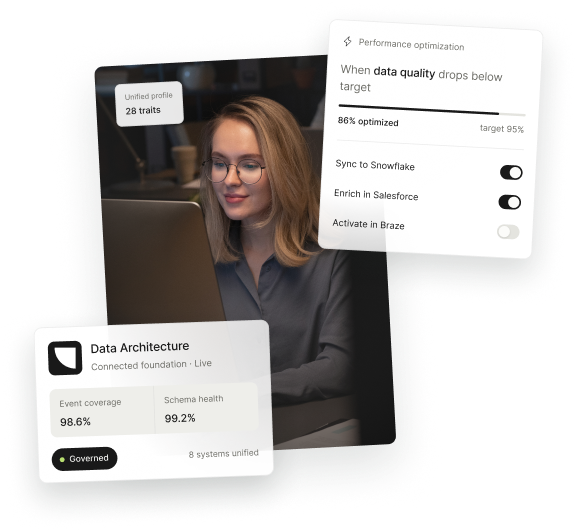
Data Governance & Quality Management
Improve data consistency, reliability, and governance across customer data collection, processing, and activation workflows.
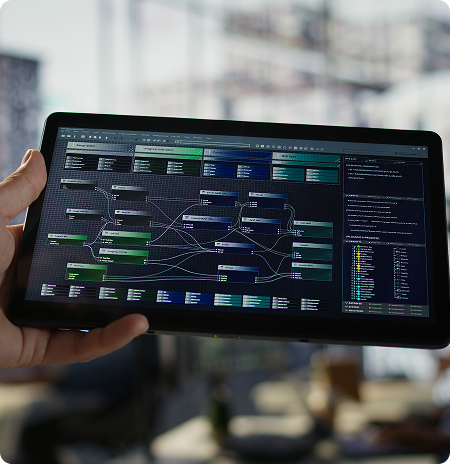
Lifecycle Marketing & Audience Activation
Connect behavioral events and warehouse-derived customer intelligence to the platforms that drive customer engagement and marketing activation.

Marketing Operations & Managed Services
Extend your customer data capabilities with specialized resources across platform engineering, data operations, and marketing technology.

A structured framework for turning customer data into measurable activation.
From understanding your existing data architecture to activating customer intelligence across business systems, our approach connects strategy, engineering, technology, execution, and measurement at every stage.
Discover
Assess RudderStack architecture, event tracking, data models, and integrations
Identify data quality issues, identity gaps, and operational dependencies
Evaluate customer engagement requirements and activation opportunities
Architect
Define the target event, identity, and data architecture
Align RudderStack with warehouses, CRM, and marketing platforms
Establish tracking standards, governance, and implementation priorities
Instrument & Unify Data
Implement event collection across websites, applications, and backend systems
Configure sources, transformations, and customer identity rules
Build unified customer profiles and warehouse-native data models
Develop Intelligence
Build customer attributes, behavioral models, and audience definitions
Apply SQL and warehouse-driven customer intelligence
Develop churn, engagement, and customer lifetime value insights
Activate & Operate
Connect event streams and warehouse data to downstream platforms
Activate customer signals across CRM and marketing automation systems
Monitor pipelines, integrations, data quality, and activation workflows
Measure & Optimize
Establish data quality, pipeline performance, and activation KPIs
Measure lifecycle outcomes and customer engagement performance
Identify opportunities for further automation, optimization, and activation
Build the foundation for intelligent customer data activation.
RudderStack continues to evolve across event collection, customer identity, warehouse-native intelligence, and AI-assisted data operations. For enterprises, getting value from these capabilities means understanding how they fit into the broader data architecture and customer engagement ecosystem.

Event Stream
Collect behavioral events from websites, mobile applications, and backend systems, then route them to supported destinations. Build the event collection and delivery foundation for connected customer experiences.

Profiles
Unify customer identities, attributes, and behavioral data through warehouse-native customer profile modeling. Establish a consistent view of customers to support segmentation, analysis, and activation.

Warehouse Models & Audience Activation
Use warehouse data and models to develop customer segments and activation-ready attributes. Connect customer intelligence to downstream business applications through supported Reverse ETL and audience workflows.

RudderStack Lookout
Explore AI-assisted audience discovery and activation through RudderStack Lookout. Assess opportunities for natural-language audience building and activation across supported customer data workflows.













Frequently Asked Questions
What does a RudderStack implementation involve?
A RudderStack implementation typically covers platform architecture, event tracking, source and destination configuration, transformations, identity resolution, warehouse integration, governance, testing, and operational enablement. Scope depends on your existing data infrastructure and customer activation requirements.
What is the difference between RudderStack Event Stream and Reverse ETL?
Event Stream collects behavioral events from websites, mobile applications, and backend systems and routes them to supported destinations. Reverse ETL uses data already modelled in your warehouse or supported data source and syncs it to downstream business applications. Both support customer data activation but serve different purposes.
Can RudderStack integrate with Salesforce Marketing Cloud and Braze?
Yes. RudderStack supports integrations with platforms including Salesforce Marketing Cloud and Braze. Behavioral events and warehouse-derived customer attributes can be routed through supported integration methods to support lifecycle journeys, audience activation, and customer engagement.
What are RudderStack Profiles?
RudderStack Profiles is a warehouse-native framework for building unified customer profiles. It uses identity rules, entities, and feature definitions to create customer-level data models in your warehouse, supporting customer intelligence and downstream activation.
Can RudderStack support real-time customer engagement?
RudderStack Event Stream can route behavioral events to supported destinations as they are collected. This can support event-driven customer engagement and triggered campaigns. End-to-end timing depends on event processing, transformations, destination capabilities, and downstream platform behavior.
Can we migrate from Segment to RudderStack?
Yes. A migration can involve moving event collection, tracking specifications, transformations, identity logic, and destination integrations to RudderStack. The migration approach depends on your existing architecture and requirements; a detailed assessment should precede implementation.
How does RudderStack support data governance?
RudderStack provides capabilities such as Tracking Plans, Data Catalog, transformations, and pipeline monitoring to help manage event consistency and data quality. A broader governance framework should also account for access controls, consent requirements, and policies across the wider data environment.
Can RudderStack help reduce customer data platform costs?
RudderStack can provide an alternative architecture for organizations evaluating CDP costs, including warehouse-native and self-hosted deployment approaches. Actual savings depend on event volumes, infrastructure, engineering resources, destination usage, and ongoing operational costs.
Does Mavlers provide ongoing RudderStack support?
Yes. Mavlers can support ongoing RudderStack operations, including platform administration, event tracking, integration maintenance, pipeline monitoring, data quality management, and optimization.